

Why Do Trace Minerals Work?
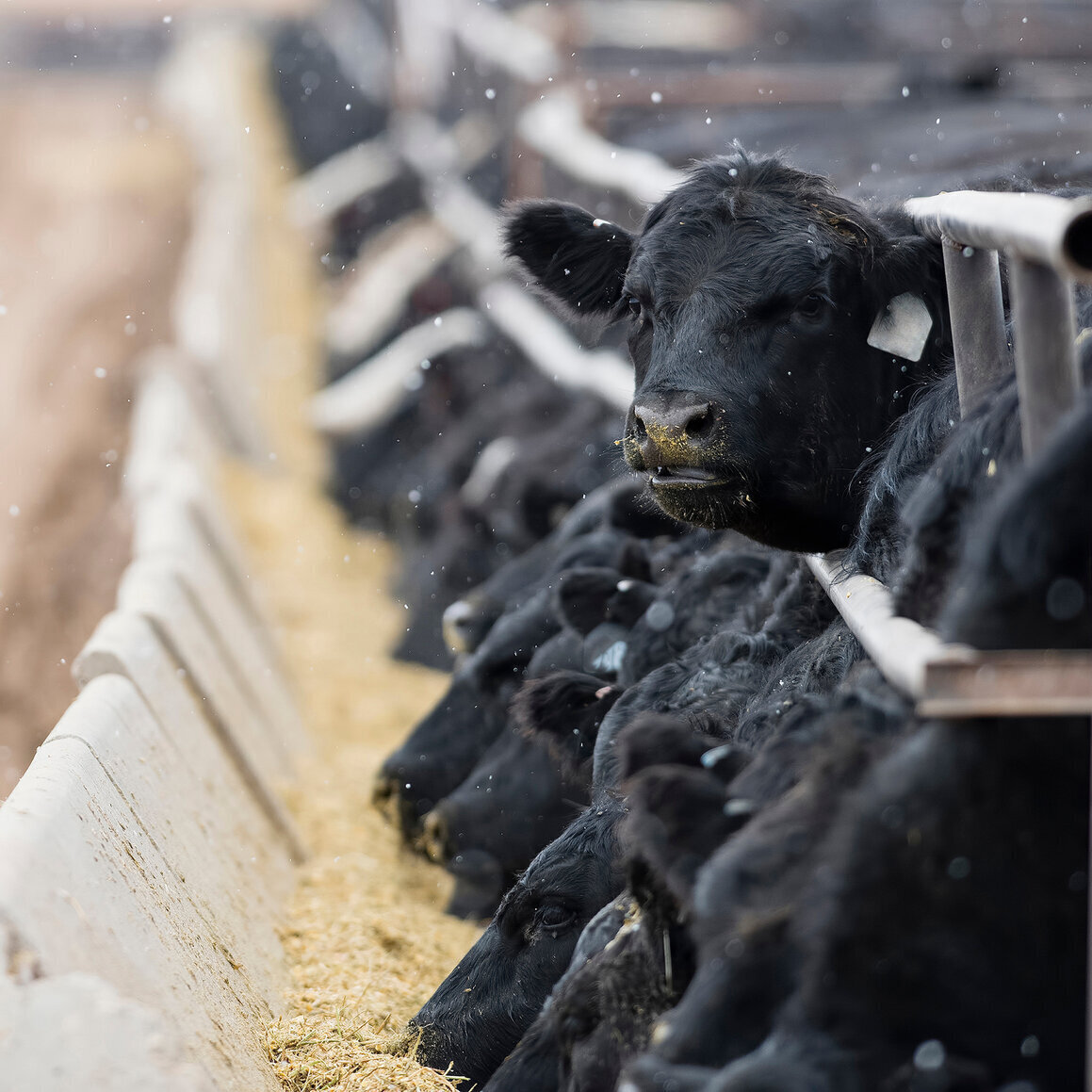
Why Do Trace Minerals Work?
The Biology Behind Performance Responses
Trace minerals may be required in small amounts, but their influence on animal health and performance is significant.
Zinc, copper, manganese, selenium and chromium support biological processes ranging from immune function and tissue integrity to metabolism, reproduction and the response to stress.
But simply including a mineral in the ration doesn't automatically mean the animal can absorb and use it effectively.
Mineral source, rumen conditions, dietary interactions and the animal's ability to transport and utilise that mineral all influence what ultimately becomes available to the animal.
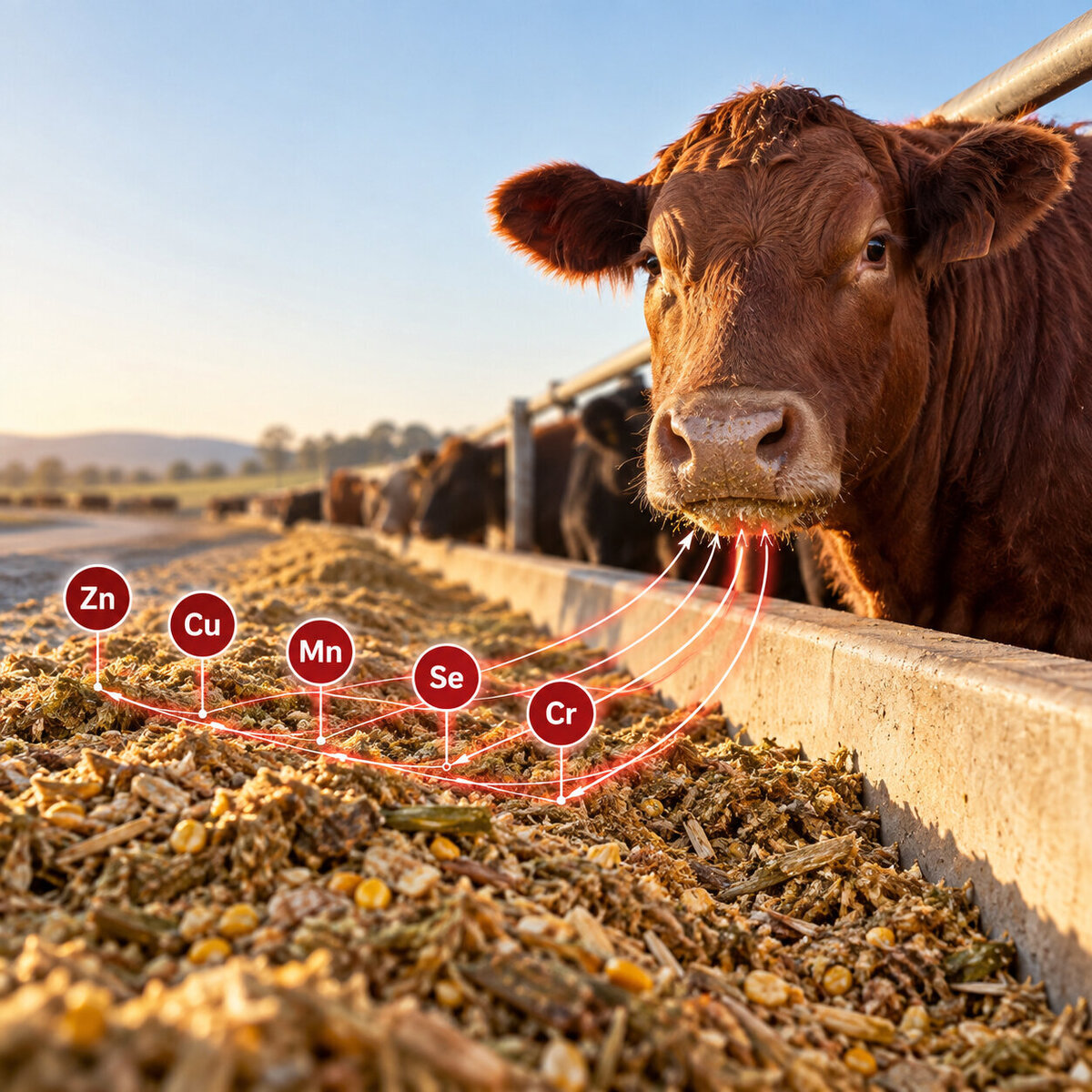
Small Nutrients. Essential Roles.
Trace minerals perform different but interconnected roles within the animal.
Zinc supports enzyme activity, protein synthesis, immune function and keratin production, important for skin, hair and hoof integrity.
Copper contributes to connective tissue development, pigmentation, iron metabolism and immune function, while manganese supports skeletal development, reproduction and metabolism.
Selenium plays an important role in antioxidant defence and immune function, and chromium is associated with glucose metabolism, insulin function and the physiological response to stress.
These nutrients don't directly create weight gain, milk production or reproductive performance. Instead, they support the biological systems that allow animals to remain healthy, respond to challenges and make productive use of the nutrients they consume.
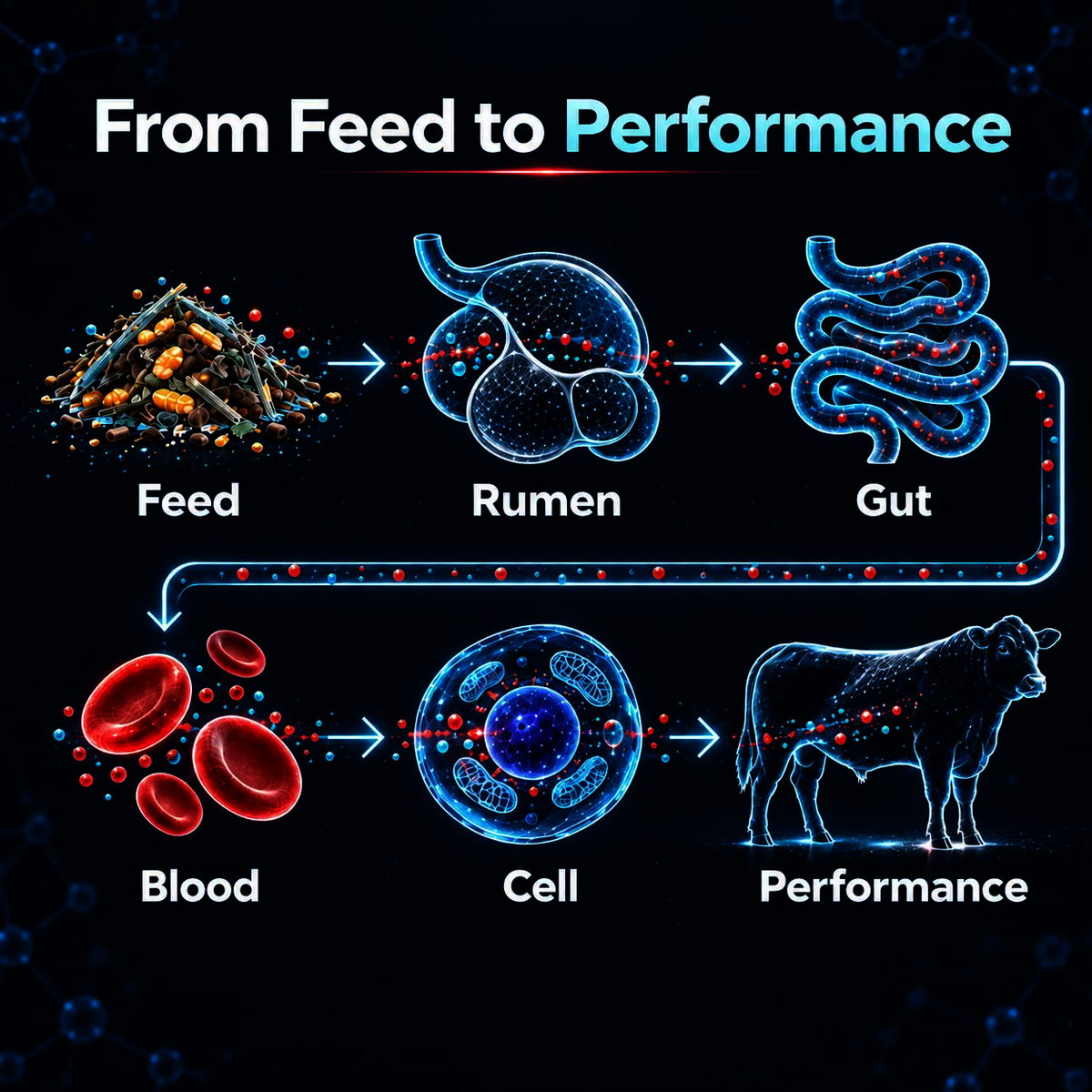
From Feed to Performance
The amount of trace mineral listed on a ration formulation is only the beginning of the story.
For that mineral to contribute to animal performance, it must travel through several stages:
Feed → Rumen → Gut → Blood → Cell → Performance
At every stage, there is potential for availability to be reduced. Minerals may interact with other dietary components, be affected by the rumen environment, compete with other minerals or form complexes that make absorption more difficult.
Even after absorption, the mineral must still be transported to the appropriate tissues and incorporated into enzymes, proteins and metabolic pathways.
It's not simply about how much mineral goes into the ration. It's about how much reaches the animal in a usable form.
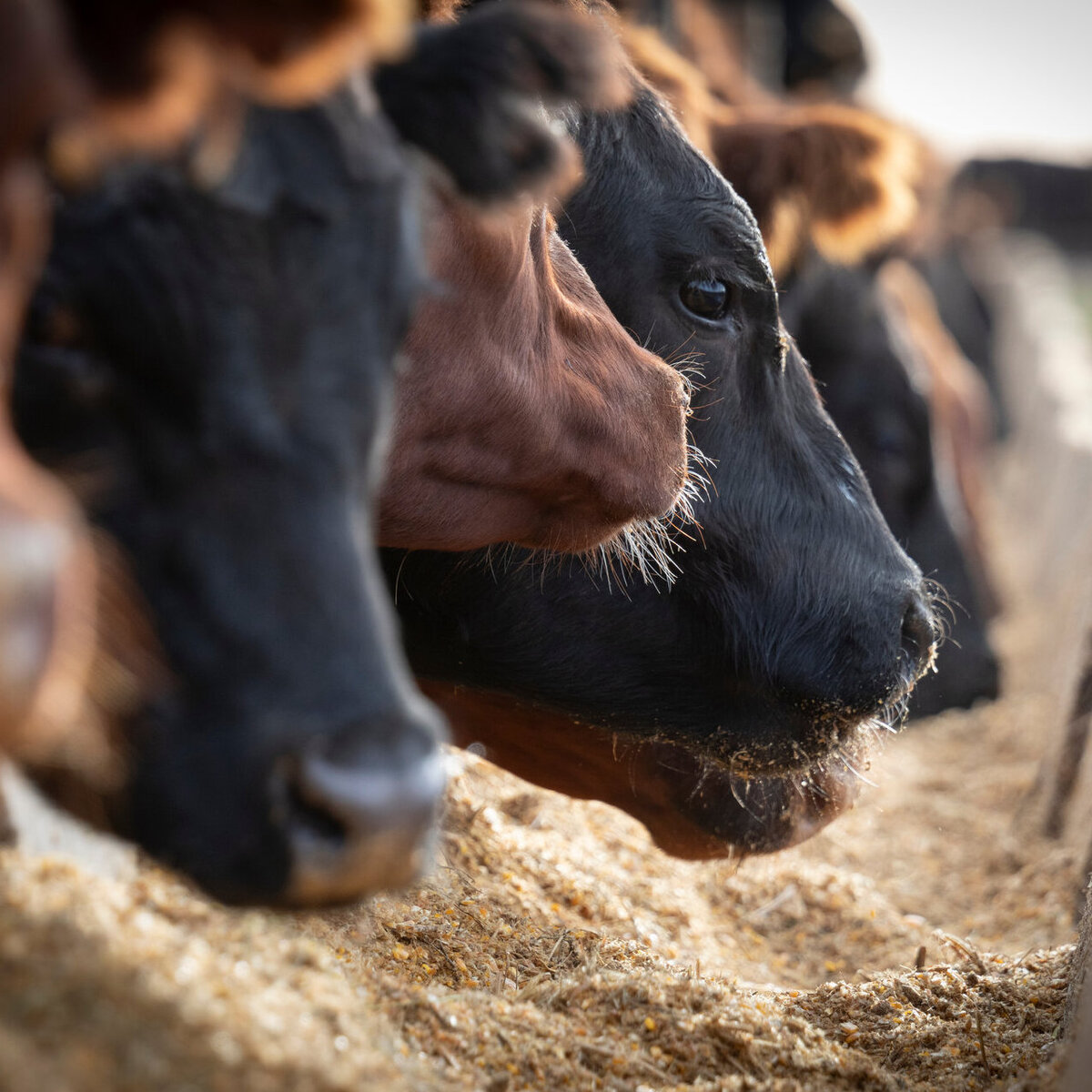
Why Mineral Source Matters
Not all trace mineral sources behave in the same way through the digestive system.
Inorganic trace minerals are commonly supplied as salts, including sulphates, oxides and chlorides. Depending on their form and the ration, these minerals can interact with other feed components before absorption.
Organic trace minerals associate or complex the mineral with an organic ligand, such as an amino acid. The nature of this association can influence how the mineral behaves through the digestive tract and its opportunity for absorption.
The objective isn't simply to supply more minerals. It's to deliver an appropriate amount in a form that gives it the best opportunity to remain available for absorption and utilisation.
The Rumen Changes the Equation
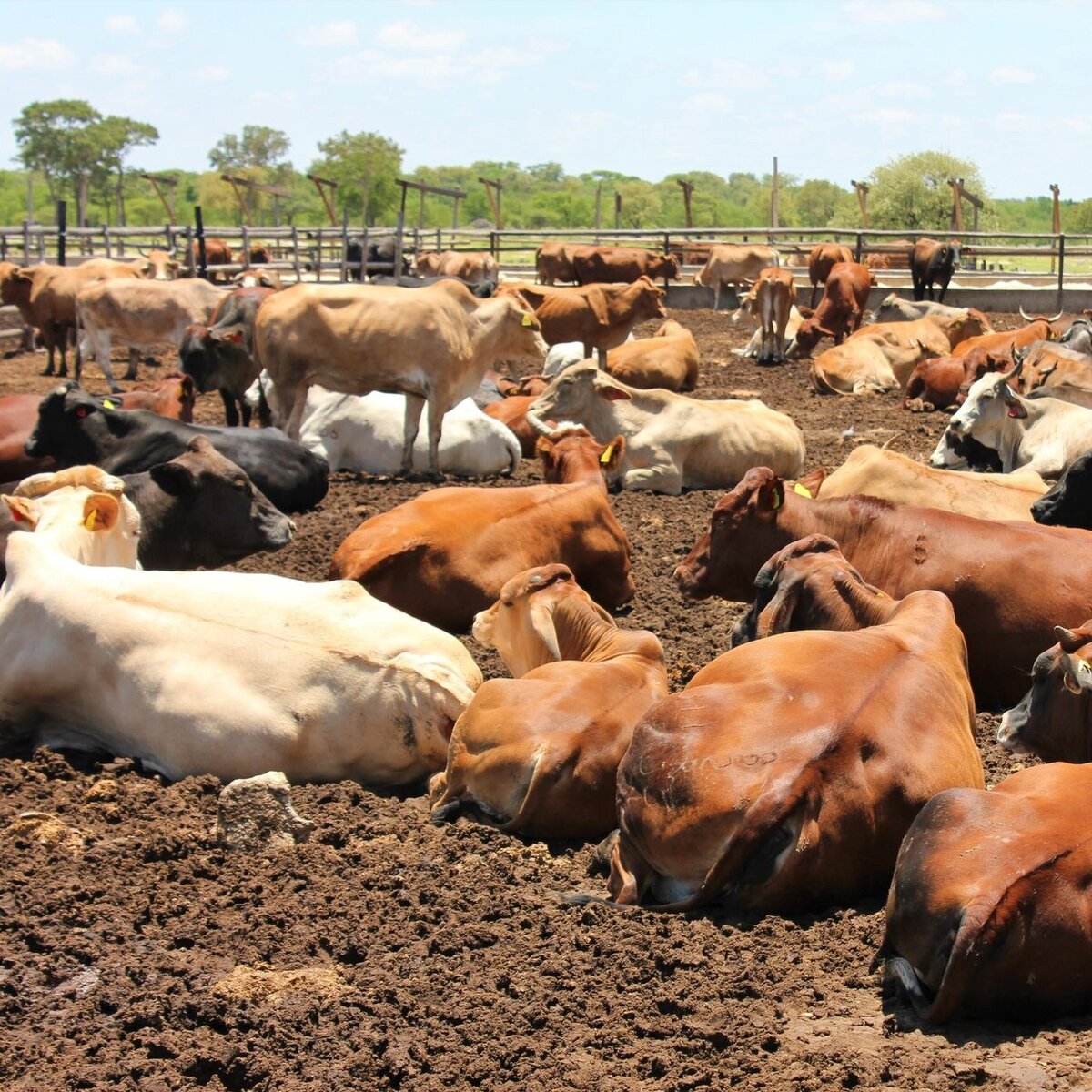
For cattle and other ruminants, the rumen adds another layer of complexity. Minerals can interact with feed components, microbes and other minerals before reaching the small intestine, the major site of absorption.
Copper is a good example. Interactions between copper, molybdenum and sulphur can reduce copper availability, potentially contributing to poor copper status even when the ration appears to contain an adequate amount. It reinforces one of the most important principles in trace mineral nutrition:
Where Methionine Fits
Methionine isn't a trace mineral , it's an essential amino acid involved in protein synthesis.
Within organic trace mineral technology, however, methionine can also act as the organic ligand associated with a mineral.
ZinMet® combines zinc and chromium bound to methionine. AAP's technical material describes ZinMet® as bypassing rumen degradation at approximately 80%, helping deliver its trace mineral components through the gastrointestinal tract for absorption and utilisation.
This brings together complementary nutritional roles associated with immune function, tissue integrity, protein synthesis, glucose metabolism and stress response.
Why Stress Matters
Transport, induction, dietary transition, heat, cold, handling and disease challenge can affect feed intake, immune demand and metabolic priorities.
During these periods, animals may have less capacity to tolerate nutritional shortfalls or inefficient mineral utilisation.
Trace minerals aren't a substitute for good animal health protocols, ration formulation or management. However, an appropriate trace mineral strategy can form part of supporting animals when biological demand is elevated.

Where AAP's Organic Trace Minerals Fit
AAP's organic trace mineral range provides targeted options for different livestock and production systems.
ZinMet® supplies zinc and chromium bound to methionine and is used across beef, dairy, sheep and poultry systems.
LiquiTrace® 8 combines zinc, manganese, copper, chromium and selenium alongside an inorganic cobalt source, using methionine-, betaine- and yeast-associated mineral forms.
AAP also produces metal-specific amino acid complexes, including zinc-methionine and manganese-methionine, for more targeted trace mineral supplementation.
The right approach depends on the species, production system, existing ration and nutritional objective.


